Helping an Anxious Child at the Dentist: What Works
Dental fear is learned, and it can be unlearned. What we do in the chair, and what helps most at home before the appointment.
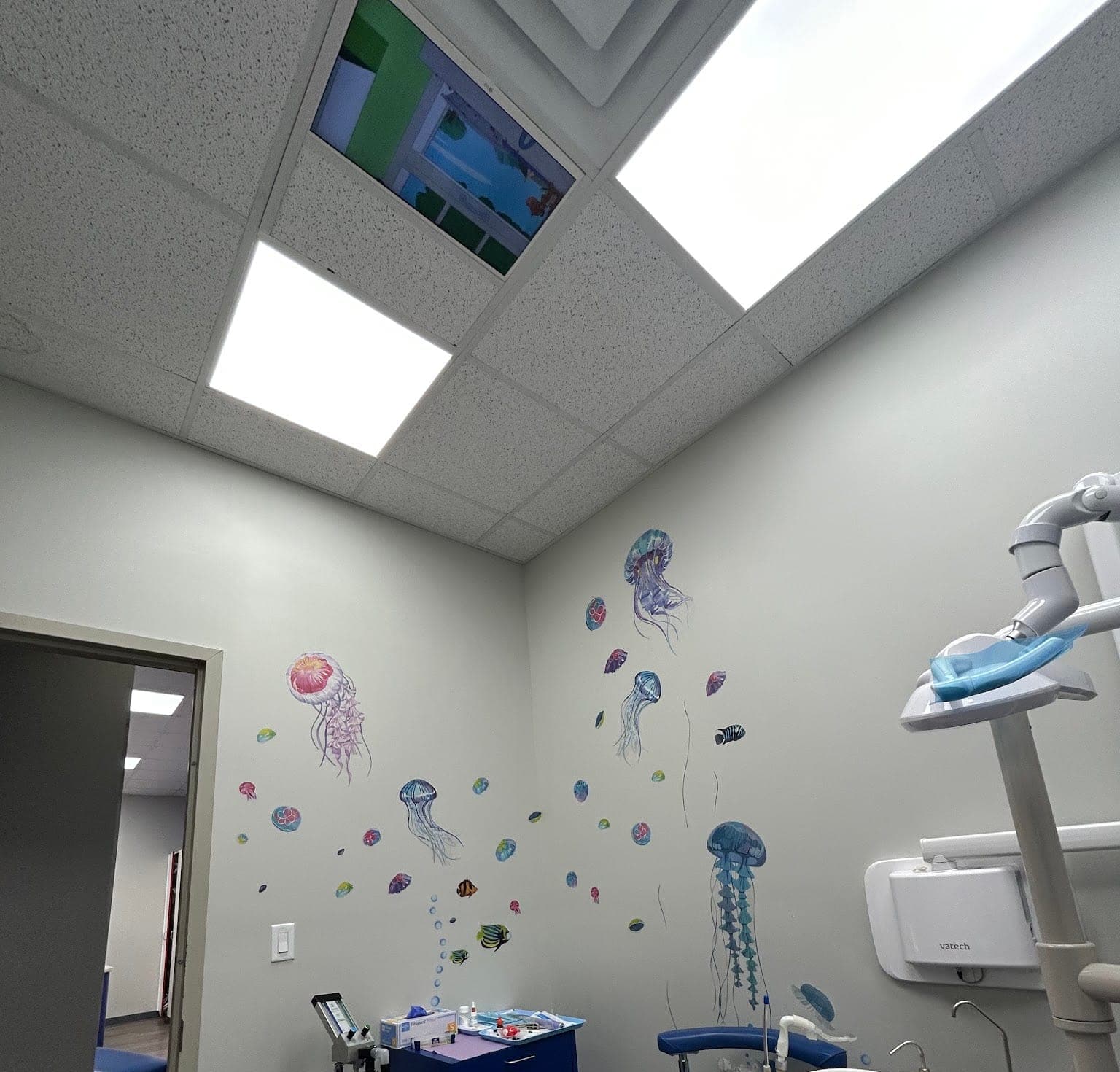
A frightened child at a dental office is not a discipline problem. It's a child in an unfamiliar room, lying down, with a stranger near their face. Almost every one of them can be brought around, and the approach is fairly consistent.
What we do in the chair
Tell, show, do. Nothing touches your child before they've seen it. The suction is "Mr Thirsty" and it gets tried on a finger first. The polisher gets held against a fingernail so they feel the tickle. Surprise is what frightens children, so we remove it.
Cartoons overhead. There's a TV in the ceiling above every chair. A child watching their show is a child whose attention is somewhere other than their mouth, and it does more work than any technique we have.
Breaks on request. We agree a signal, usually a raised hand, and we honour it every single time. A child who learns that "stop" actually stops is a child who stops needing to use it.
Laughing gas when it helps. Nitrous oxide through a small scented nose mask takes the edge off within a couple of minutes. Your child stays awake and chatty, and it wears off completely before you leave.
What helps most at home
- Keep your own language neutral. Avoid "it won't hurt", "be brave", "you'll be fine". Children hear the words hurt and brave and conclude that something worth being brave about is coming. Say "the dentist is going to count your teeth" instead.
- Don't over-prepare. Mention it the day before, not the week before. A week is a long time to worry.
- Never use the dentist as a threat. "If you don't brush, the dentist will drill your teeth" costs years of trust.
- Book a morning slot if your child tires or melts down in the afternoons.
- Bring the comfort object. A toy, a blanket, headphones. Whatever already works elsewhere works here.
When a child needs more time
For children with autism or sensory sensitivities, we book longer appointments and are happy to do a visit where nothing clinical happens at all: walk in, meet us, sit in the chair, go home. Parents tell us that after two or three of these, X-rays that had never been possible suddenly are. That's a real result, and it's worth the visits it takes.
Tell our front desk what works for your child when you book, and we'll build the appointment around it.
Have a nervous little one? Request an appointment or call (718) 509-4888 and tell us about them first.
Ready to put this into practice?
Same-week appointments · (718) 509-4888